
DIGITAL TECHNIQUES (313303)


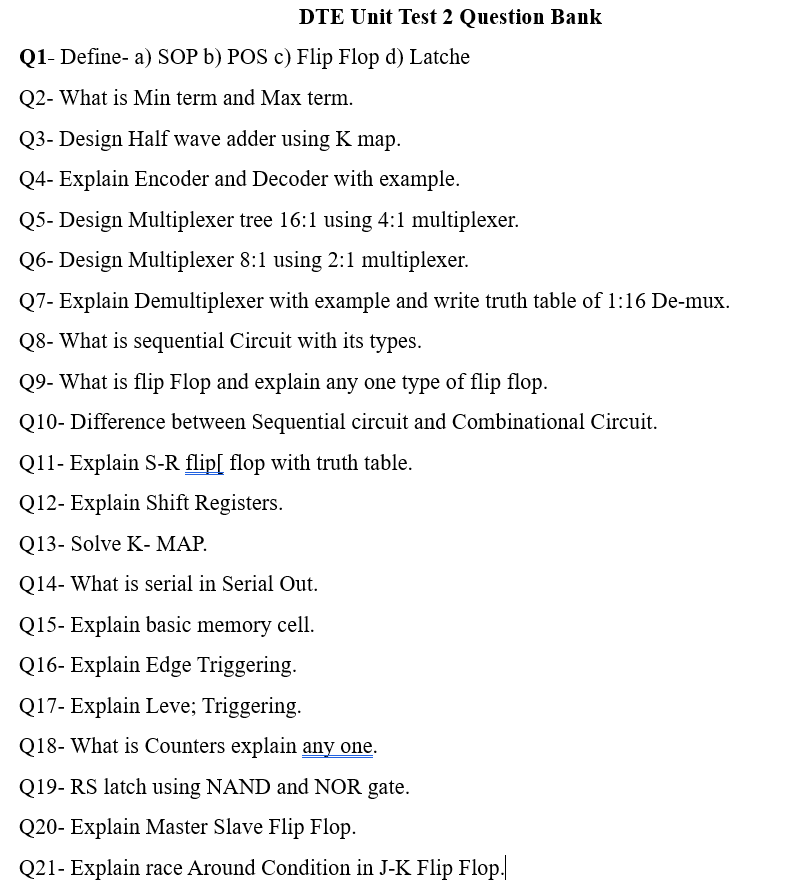
- Assignment no 1
- Assignment no 2
- Assignment no 3
- Assignment no 4
- Assignment no 5
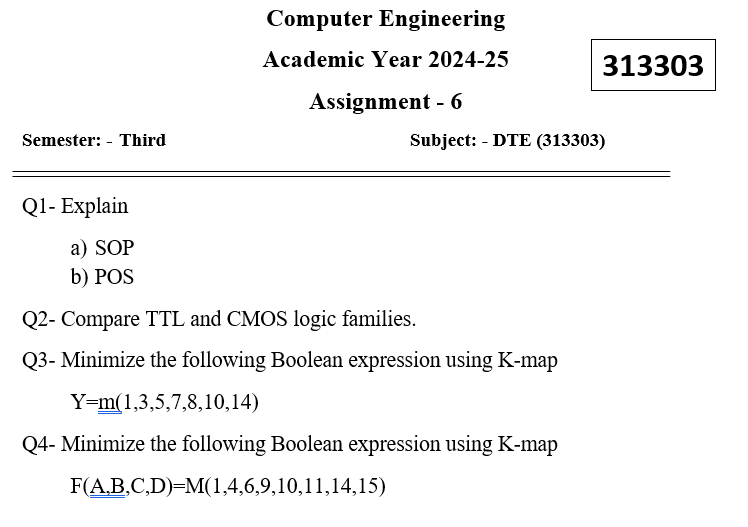
- Assignment no 6
- Assignment no 7
- Assignment no 8
- Assignment no 9
- Assignment no 10
- Assignment no 11
- Assignment no 12
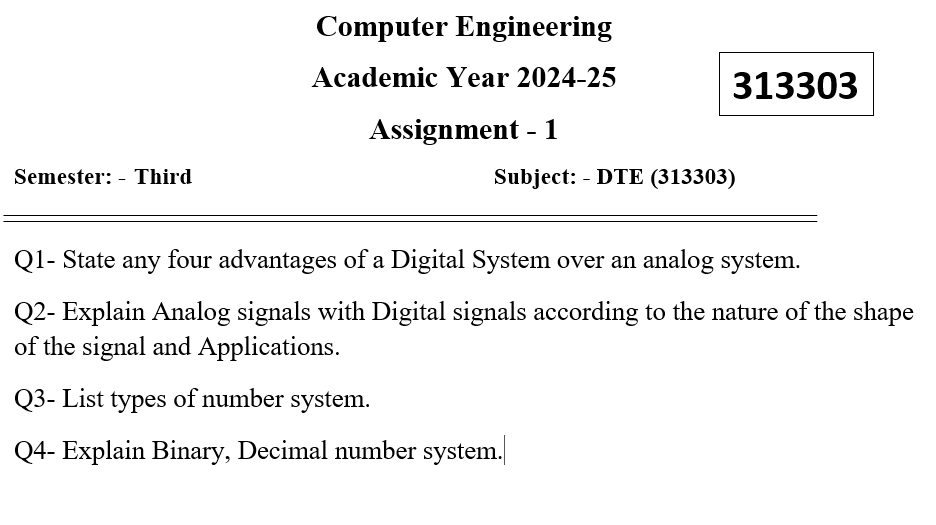
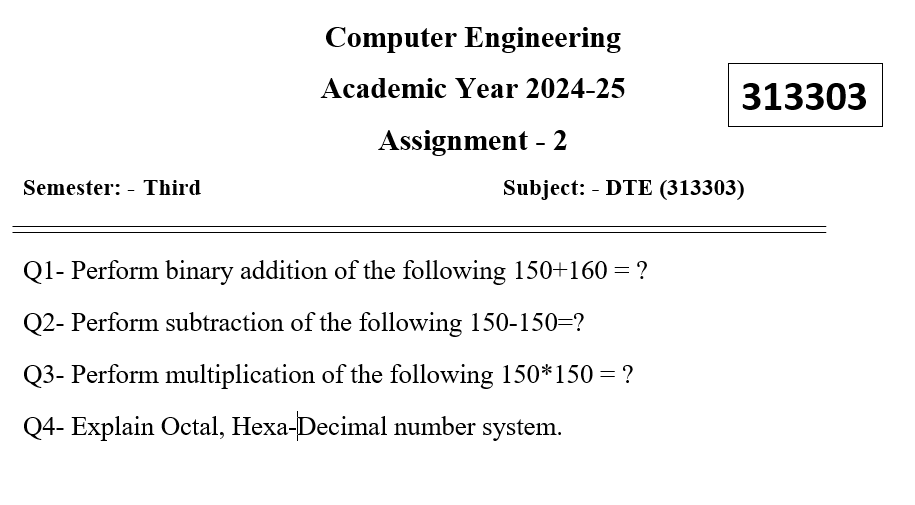
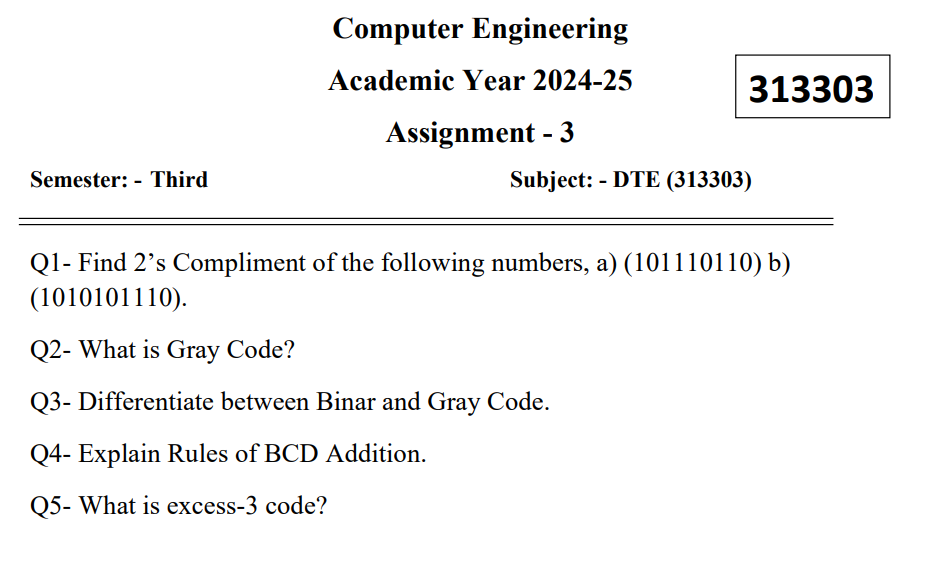


🔌 Mastering Digital Techniques (313303)
🚀 Introduction: The Language of Modern Computers
Welcome to Digital Techniques (Course Code: 313303), a foundational subject in the MSBTE Computer Engineering diploma that unlocks the secrets of how computers think and process information. At the heart of every smartphone, computer, and smart device are digital circuits that understand only two states: ON (1) and OFF (0).
This subject teaches you the fundamental language of these circuits—Boolean algebra—and how to design the very building blocks (like adders, flip-flops, and counters) that form complex computational systems. For a diploma student, mastering digital techniques is not just academic; it’s about understanding the bedrock upon which the entire digital revolution is built.
📚 Syllabus Breakdown: Your Path from Binary to Complex Circuits
The MSBTE K-Scheme syllabus for Digital Techniques is structured to take you from simple binary concepts to the design of functional digital systems. The following table outlines the key units you will master:
| Unit | Unit Name | Key Topics Covered |
|---|---|---|
| 1 | Number Systems & Codes | Binary, Octal, Hexadecimal conversions, binary arithmetic, and codes (BCD, Gray, Excess-3). |
| 2 | Logic Gates & Boolean Algebra | Basic and universal gates, Boolean laws, De Morgan’s theorems, and logic gate implementation. |
| 3 | Combinational Logic Circuits | Design of adders, subtractors, multiplexers, demultiplexers, encoders, and decoders. |
| 4 | Sequential Logic Circuits | Flip-flops (SR, JK, D, T), shift registers, and counters (asynchronous and synchronous). |
| 5 | Logic Families & Memory | Characteristics of TTL and CMOS logic families, and an introduction to semiconductor memories. |
🎯 Why This Subject is the Foundation of Your Computer Engineering Career
Digital electronics is the essential bridge between theoretical concepts and practical hardware. Here’s why this subject is absolutely crucial:
Core of Computer Architecture: The CPU, memory, and I/O interfaces of any computer are built using the very combinational and sequential circuits you will study here. You cannot understand how a computer works without this knowledge.
Prerequisite for Advanced Subjects: This subject lays the groundwork for critical future courses like Microprocessors, Computer Organization, and Embedded Systems.
Hardware Design & Troubleshooting: It equips you with the skills to design simple digital systems and troubleshoot electronic circuits, a key ability for roles in hardware testing and R&D.
The Internet of Things (IoT): The proliferation of smart devices relies on simple, efficient digital controllers. The principles you learn here are directly applicable to the world of IoT.
💡 Deep Dive: Core Concepts of Digital Techniques
To excel in this subject, focus on understanding these fundamental concepts:
Boolean Algebra – The Mathematics of Logic: This is a special type of algebra where variables can only have two values: TRUE (1) or FALSE (0). It uses operations like AND, OR, and NOT to create logical statements that can be physically implemented using logic gates. Mastering simplification techniques like Karnaugh Maps (K-Maps) is essential for optimizing circuit design.
The Power of Universal Gates: NAND and NOR gates are called “universal” because you can implement ANY logical function (AND, OR, NOT) using only one type of these gates. This is a powerful concept in integrated circuit design, simplifying manufacturing.
Combinational vs. Sequential Circuits:
Combinational Circuits: Their output depends only on the present input. Examples include adders and multiplexers. They have no memory of past inputs.
Sequential Circuits: Their output depends on both the present input and the past history of inputs. They have memory, which is achieved using flip-flops. Examples include counters and shift registers.
Flip-Flops – The 1-Bit Memory: A flip-flop is a fundamental building block that can store a single binary digit (0 or 1). It is the simplest form of memory and is used to build registers, counters, and is a key component of computer memory.
🛠️ Study Tips for MSBTE Exam Success
To master Digital Techniques and ace your exams, adopt these proven strategies:
Practice Number Conversions: Be able to swiftly convert between decimal, binary, octal, and hexadecimal systems. This is a fundamental and guaranteed marks-scoring area.
Master K-Map Simplification: Practice solving as many K-Map problems as possible. This is a standard method for minimizing Boolean functions and is a very common exam question.
Draw Neat Circuit Diagrams: Practice drawing clean, well-labeled diagrams of combinational circuits (like a full-adder using two half-adders) and sequential circuits (like a 3-bit counter using JK flip-flops). A clear diagram can earn you significant marks.
Understand the Truth Tables: For every logic gate and circuit (like a multiplexer or decoder), be able to write its truth table. The truth table is the definitive definition of its functionality.
Use Official MSBTE Resources: Refer to the K-Scheme curriculum and solve MSBTE model answer papers to understand the pattern of questions, which often includes numerical conversions, circuit design problems, and explaining concepts with diagrams.
🌟 Conclusion: Building the Brain of Modern Technology
Digital Techniques (313303) is more than a subject; it is the essential primer that explains how complex computational tasks are broken down into simple, binary operations performed by electronic switches. The logic gates, flip-flops, and counters you learn about are the neurons of every digital system.
By mastering these principles, you are not just preparing to pass an exam; you are peering under the hood of the digital world, gaining the foundational knowledge that will allow you to understand, design, and innovate in the field of computer hardware and embedded systems.